
Author: Rob Loveday and Kiersten Sundell
The US has been trying to figure out what to do with nuclear waste for 44 years, and we’re not much closer to a solution than we were in 1982.
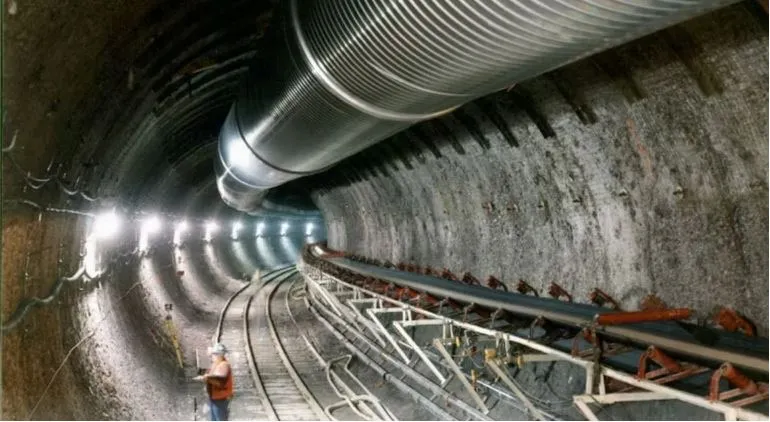
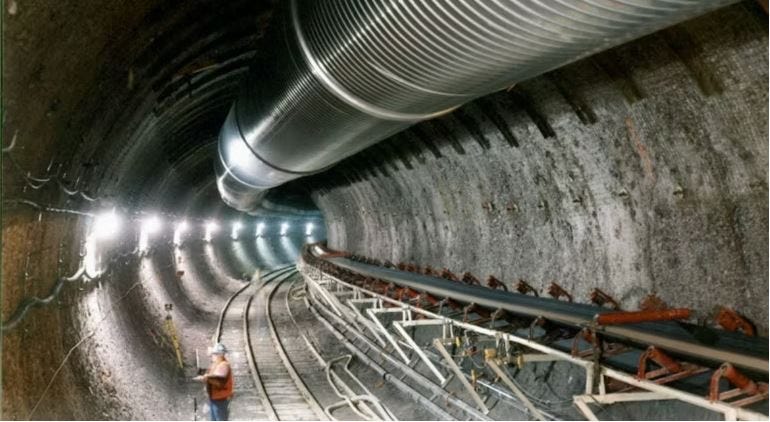
Not because it’s an impossible problem – Finland and Sweden are both building deep geological repositories right now.
And not because we don’t know where to put it – the Department of Energy (DoE) has been building partnerships and attracting community interest through its consent-based siting program for the past several years.
No, the real reason we can’t crack nuclear waste is because we keep putting the wrong people in charge.
The Nuclear Waste Policy Act of 1982 tasked the DoE with finding, developing, and operating a permanent repository for spent nuclear fuel. Yucca Mountain looked promising for a while, but Congress pulled funding in 2010, and it’s been sitting in limbo ever since.
In the meantime, nuclear plants across the country are storing their own waste on-site. It’s a solution that works fine for now, but it’s not a permanent one.
Enter NuCorp
Recently a bipartisan group of experts, including a former DoE official and former Nuclear Regulatory Commission (NRC) chair, published a report with a pretty straightforward solution: take this responsibility away from the DoE and give it to the people who have a real stake in solving the problem fast.
Their proposal is called NuCorp, an independent corporation led by nuclear reactor owners. These guys are already responsible for managing waste at their own plants, meaning that they understand the logistics, the safety requirements, and the timeline.
Any site selected under NuCorp would still require NRC licensing, as well as an independent advisory committee. This group of technical experts and representatives from relevant state, tribal, and local governments would oversee operations and report annually back to Congress and the public. The structure maintains the safety and oversight of a DoE job, it just puts implementation into more motivated – and experienced – hands.

Cash no problem
And here’s the money part that makes this whole thing possible. From 1983 to 2014, all US nuclear plant operators paid into something called the Nuclear Waste Fund, which was designed to finance a permanent disposal solution. By 2014, it had accumulated $40 billion.
Then, a federal court stepped in. The court basically said “you can’t keep collecting money for a program that doesn’t exist,” and ordered the DoE to stop charging the fee (which is a fair point). But even though operators stopped paying in 2014, the fund kept growing from interest alone, and now sits at around $52 billion.
The NuCorp proposal would use this money for its original purpose. Operators are currently paying to store waste at their plant sites, and would jump at the chance to engineer a real, permanent solution. Finland and Sweden are succeeding because they put the nuclear industry in the driver’s seat with strong regulatory oversight, and it’s time for the US to do the same.
Campus kings
Just last month, the DoE launched another initiative: Nuclear Lifecycle Innovation Campuses. The idea is to get states to volunteer to host regional hubs that handle everything from fuel fabrication and enrichment to reprocessing used fuel and storing the waste onsite. States like Wyoming, Tennessee, and Idaho are already competing for the chance, lured by the promise of up to $50 billion in private investment and thousands of jobs.
On paper, it sounds great – a whole-cycle solution with willing host communities. But it’s still the DoE running the show, and after four decades of false starts, that’s exactly the problem.
We can’t solve the waste debacle with another study or another decade of congressional back-and-forth, but by putting responsibility where it belongs. Forty-four years is long enough to wait.
Check out our video on this on YouTube, TikTok, or Instagram