
Author: The Kernel and Kiersten Sundell
There’s a new tech war brewing in the United States, and it’s fueled by billions of dollars, national energy security, and the massive egos of companies convinced that they can reinvent nuclear power. It’s the race to deploy the first game-changing advanced reactor.
GE Hitachi’s plan is to make existing technology smaller and remove the pumps. They’ve manufactured boiling water reactors since the 1960s, and have built 67 licensed reactors across 10 countries. They understand water-cooled reactor physics because they’ve been implementing it commercially for six decades. Their reactors are operating in Japan, Taiwan, Mexico, Spain, Sweden, and the United States. This experience matters when trying to convince regulators and utilities that your new design will work.
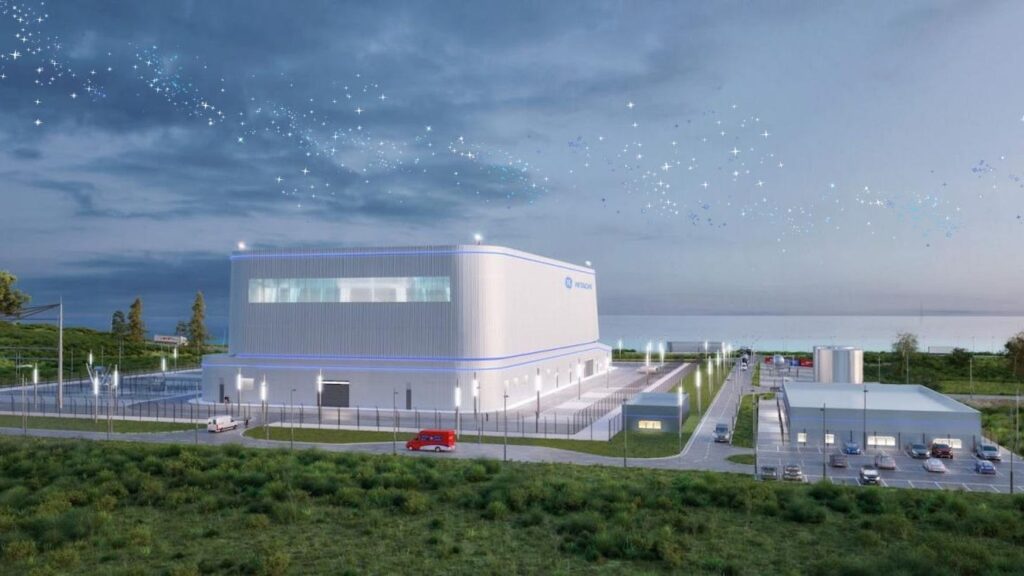
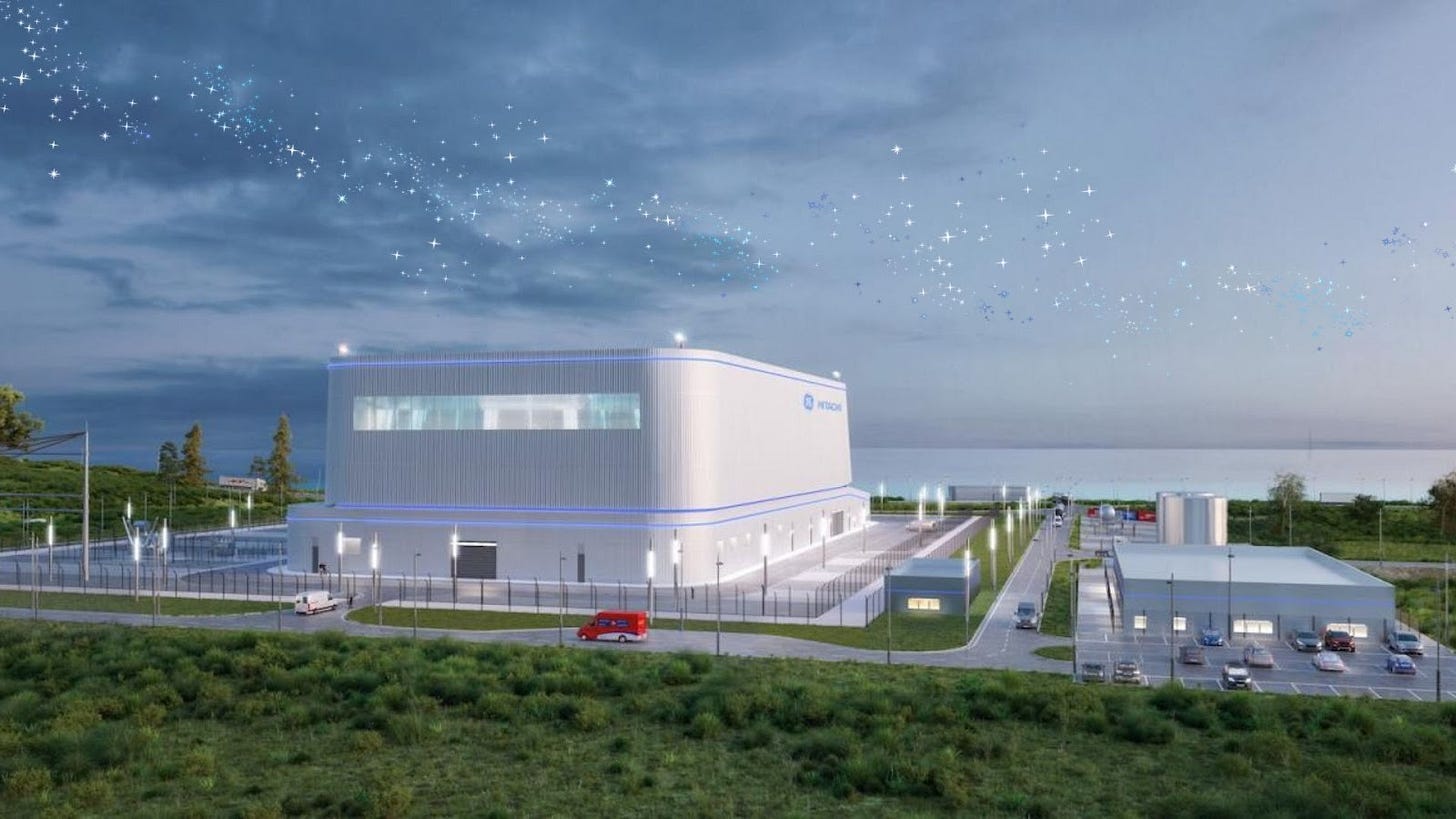
BWRX-300
The key innovation is eliminating active cooling pumps, instead utilizing natural convection. Heated coolant rises through the core, transfers heat to steam generators, becomes denser as it cools, and sinks back down. This passive safety approach eliminates pump-related failures. There are no motors to lose power, no mechanical seals to leak, and no control systems to malfunction.
The reactor’s parent design already has NRC approval, and fuel supply chains are well-established. All that’s left is to get building.
Construction Underway
While the Darlington site will eventually host four BWRX-300 units, Ontario Power Generation is only building one to start. They want to prove the technology before committing to the full deployment, and criticality is targeted for 2030. Each reactor will generate enough electricity to power 300,000 homes, adding even more clean capacity to a famously low-carbon grid.
Luckily, this technology is slated for the U.S. too. Tennessee Valley Authority (TVA) submitted construction permit applications to the NRC in April and May 2025 for a BWRX-300 at Oak Ridge, Tennessee. They also applied for $800 million in Department of Energy funding through the Generation III+ SMR program. If received, reactor deployment could be as early as 2033.
Beyond North America, Poland, Sweden, Estonia, the United Kingdom, and Hungary have all expressed deployment interest. In July 2025, a letter of intent was signed to deploy up to ten BWRX-300 reactors in Hungary.
When utilities across multiple countries independently select the same reactor design, it means something good. Utility companies are conservative, risk-averse organizations that answer to regulators, ratepayers, and investors. They don’t make buying decisions based on marketing hype — their pick is what they believe will operate reliably and economically.
The Assessment
They took technology that utilities understand, regulators trust, and operators know how to run, and shrunk it for contemporary electricity markets that value “tiny” over “turns on.”