
Author: The Kernel and Kiersten Sundell
Dozens of companies are racing to deploy the next wave of advanced nuclear reactors in the United States, each convinced their design will work better and deploy faster than the competition. Westinghouse’s position in this competition is unique, as they’re the only participant who’s already crossed a finish line. Their AP1000 is the first Western Generation III+ reactor design to generate electricity, with four units in China and two at Plant Vogtle in Georgia. They successfully proved that advanced nuclear with passive safety can work at commercial scale, and they’re not stopping there.
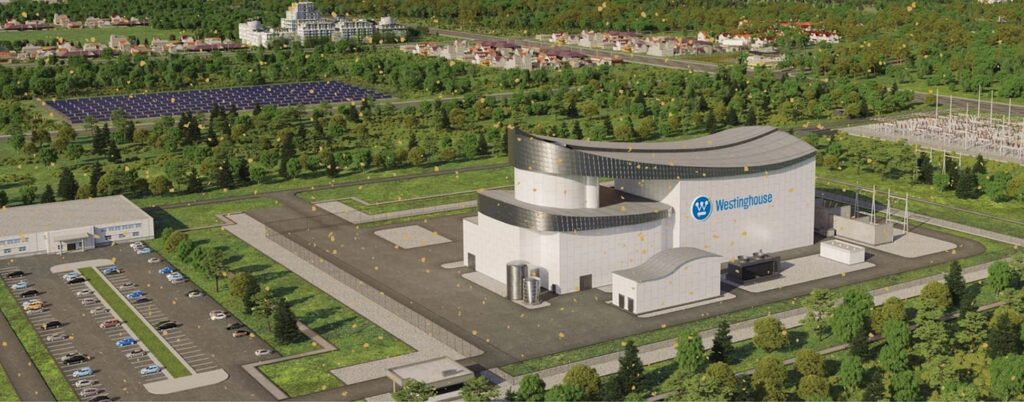
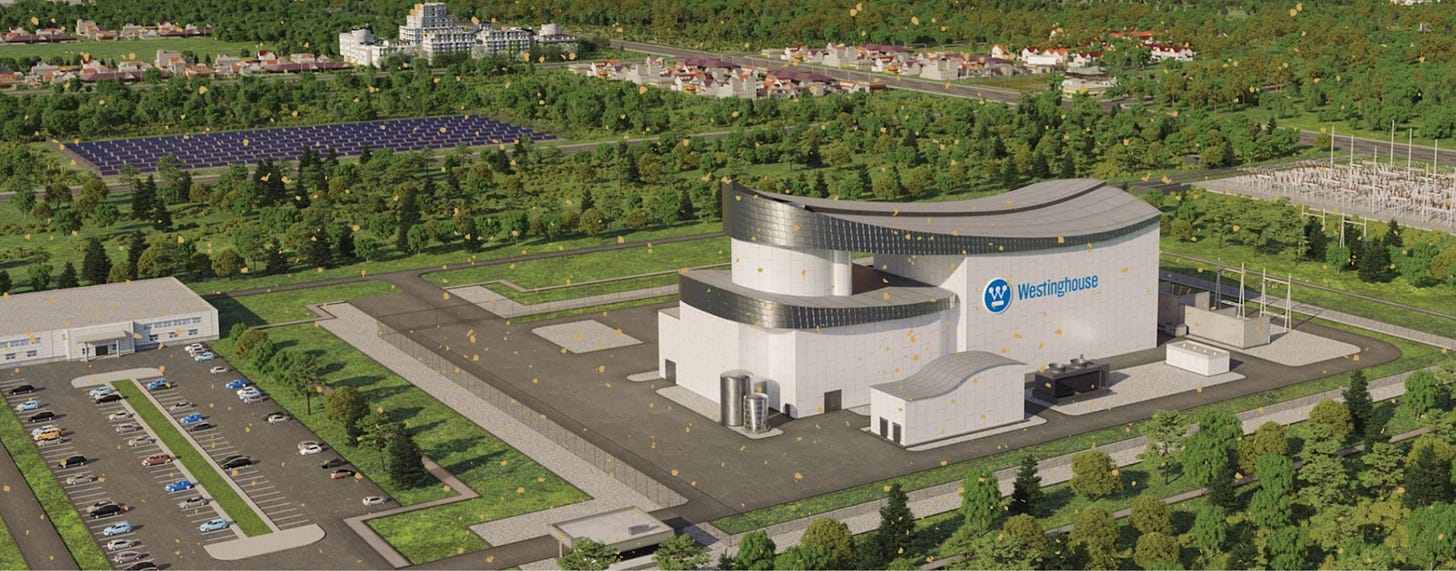
AP-300
eVinci
In 2025, Westinghouse shifted eVinci’s focus exclusively to U.S. space and defense markets, scrapping plans for the Beaver County factory while maintaining the Etna research and development hub. The company stated that eVinci “has strong application and traction in U.S. space and defense markets,” and they were “shifting focus away from commercial terrestrial applications to strategically focus on supporting the U.S. government.”
When an established nuclear manufacturer with deep resources and decades of operational experience decides not to pursue the commercial microreactor market, we should pay attention. It’s possible they’ve decided that microreactor economics don’t work commercially, that the civilian market isn’t developing as anticipated, or that following the military-microreactor strategy of companies like BWXT and Radiant may make more sense. They’re headed for the medium-small approach, alongside developers like Terrapower, Holtec, and GE-Hitachi, all of which hover in the 300 megawatt-range.
The Assessment
Westinghouse is doing what they’ve done for decades: building reactors that actually turn on. Their AP300 won’t be first to market, but we’re confident that it will materialize successfully. The company is also pursuing approximately 10 more AP1000 reactors in the United States, meaning that this market giant won’t quit racing anytime soon.