
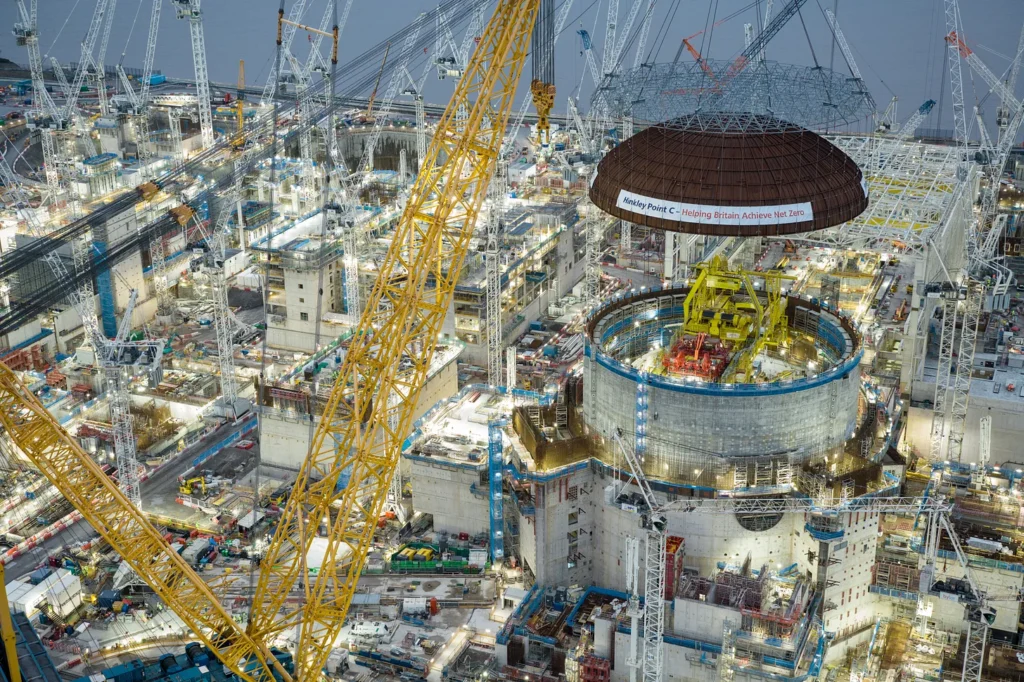
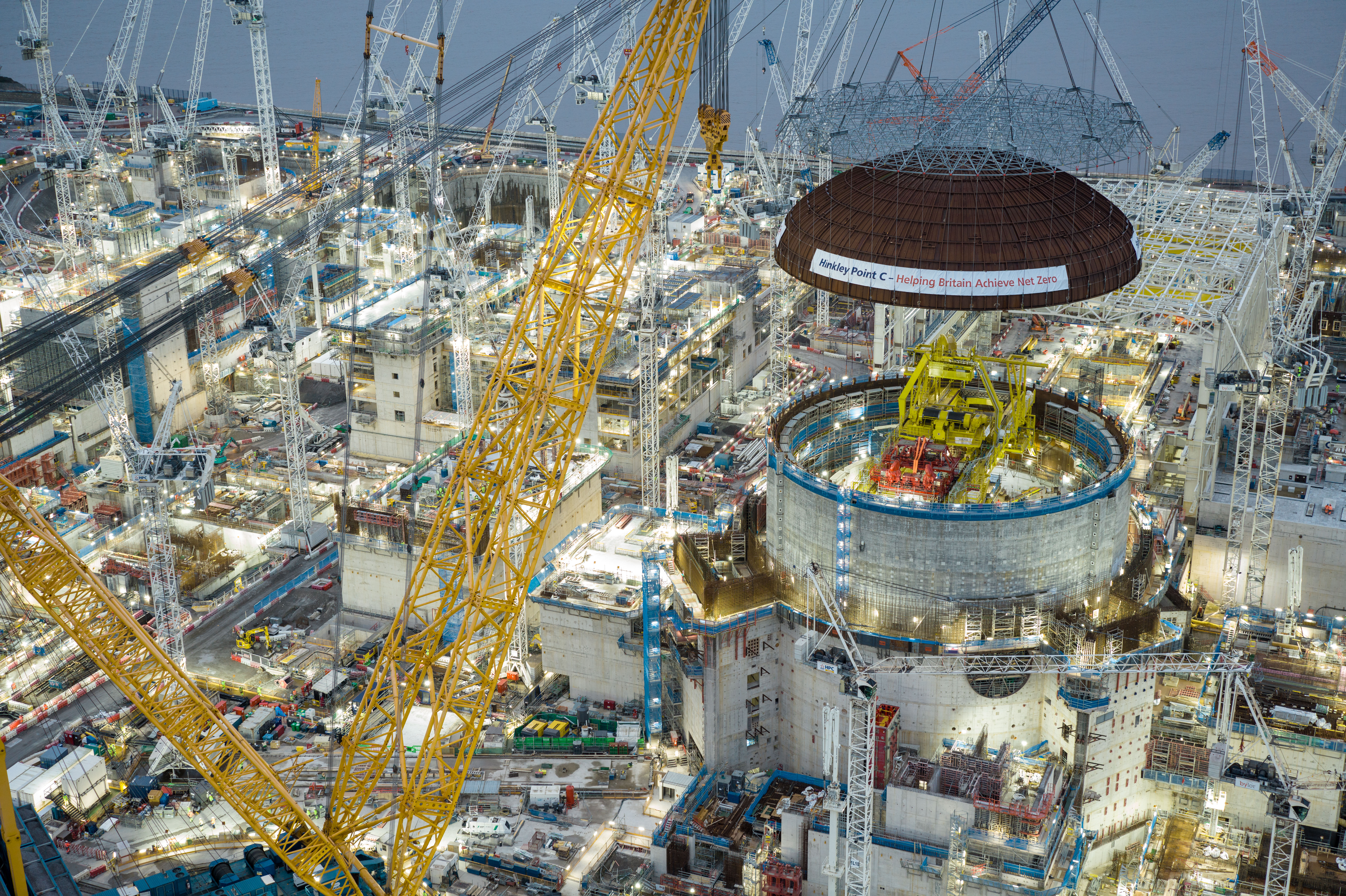
Last year was a great year for the nuclear industry. Nuclear power is now generating its highest-ever amount of electricity – around 2667 TWh in 2024, with the figure for 2025 likely to be similar. Advanced reactors took major steps towards commercialisation in the US and UK, and there were other big wins across the world – such as Belgium repealing its nuclear phase-out policy and the World Bank officially ending its long-standing ban on financing nuclear power projects.
But it’s clear that more needs to be done – after all, the fight to meet growing power demand and address climate change means we can’t wait. So here’s a list of the things we’d like to see happen in the nuclear industry across the globe in 2026.
1. Regulatory reform & streamlined licensing – especially in the US and UK
One clear theme of 2025 was interest around speeding up the process of getting reactors permitted and built, both in the US and elsewhere. And this is perhaps the most important and vital thing on our wishlist – looooooong licensing timelines scare off investors, developers and even utilities. Regulatory reform isn’t big and flashy, but without it nothing (or, at least, very little) else might happen.
What we’d like to see in 2026:
- The US Nuclear Regulatory Commission (NRC) adopting more predictable, risk-informed, performance-based licensing timelines, along with faster certification.
- In the UK, a similar continuation and acceleration of streamlined regulatory pathways – including clear timelines for final design assessments following acceptance.
So, for regulators and governments, we’d like to say: not so much “move fast and break things”, but “move a bit smarter and finish things”.
On the policy front, we need states to move from talking about nuclear to actually enabling it. 2025 showed us what works – and what doesn’t. The path forward requires clearing regulatory barriers, investing in workforce development, and creating bankable financial mechanisms.
Moratoriums must go. Illinois’ Governor just signed (SB0025) and removed its arbitrary 300 megawatt capacity cap. Meanwhile, Oregon, California, Minnesota, andRhode Island introduced moratorium repeal bills that all stalled in committee. Without repealing these restrictions, nuclear support becomes nothing more than rhetoric. You can’t develop what you’ve legally banned yourself from building.
Workforce programs need funding, not task forces. Michigan’s HB4125 provides grants to colleges and universities for nuclear degree programs, including scholarships for students who agree to work at Michigan facilities for three years. Colorado’s SB120and Texas’s workforce bills (SB1535) establish similar grant programs. Contrast this with Arkansas’s HB1073, which creates another task force. We don’t need more reports. We need training programs with actual funding.
Financial mechanisms matter. Texas’s HB14 created a three-tier funding structure with grants up to $200M, Indiana’s SB0423 established “SMR” cost recovery frameworks, and Tennessee’s HB1133 provides tax credits for nuclear facilities. These risk-sharing mechanisms recognize nuclear’s decades-long payoffs require significant upfront costs.
Nuclear policy isn’t stalled because of missing information or insufficient studies. It’s stalled because passing actual legislation requires political capital, and too many legislators aren’t willing to spend it. The question for 2026 is which states will follow through.
2. Real money flowing in, not just promises
Last year, as indeed many recent years have been, was full of big promises: net-zero pledges, nuclear “renaissances”, and advanced reactor optimism everywhere you looked. But what there wasn’t nearly enough of was capital actually flowing into projects.
For example, if we wanted to scale advanced reactors meaningfully by the 2030s, annual investment needs to jump from a few billion dollars currently to something closer to $25 billion per year by 2030, according to the International Energy Agency. That won’t happen via press releases alone.
So, our wishlist in this department:
- More private capital stepping in, not just government grants and cost-share programmes.
- New financing models – things like long-term power purchase agreements with data centers, industrial customers or hydrogen producers.
- More creative thinking around nuclear as infrastructure: bonds, regulated asset bases, and public-private partnerships that actually reach final investment decisions.
3. A real comeback in large reactor construction
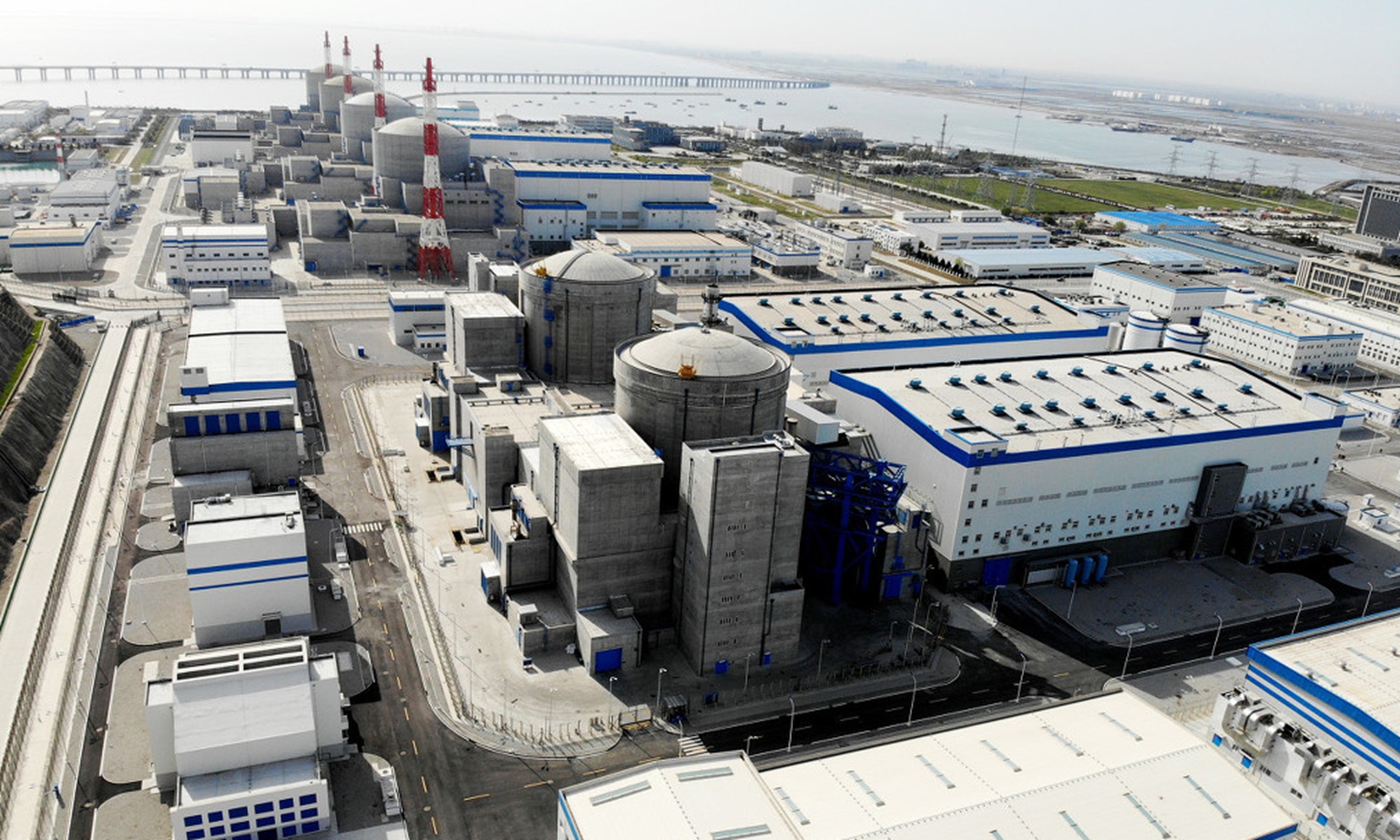
Yes, yes, we know that common-or-garden large reactors might not be as glamorous and sexy as advanced ones, but let’s face it: they still do the heavy lifting when it comes to decarbonising power systems at scale. China understands this, and so does India. France is re-learning it. The US and UK… well…
So with that in mind, we demand the following:
- At least one new large-reactor project in the US move decisively past the planning stage – with a clear design choice, financing structure and timeline.
- In Europe, a bit less “hmmm, maybe nuclear” and a bit more “nuclear, yes please!”. Poland and the Czech Republic are showing the way here.
- Japan leaning back into nuclear in an even bigger way that they’re currently planning.
- More standardization – fewer bespoke designs, more repeat builds (think Liberty ships, not Faberge eggs).
- Clear accountability between utilities, EPC firms and vendors.
- Early, honest project cost estimates instead of optimistic numbers that fall apart mid-build.
Big reactors aren’t dinosaurs. They’re the fastest way to add truckloads of firm, clean power – if countries are willing to commit. Just ask the United Arab Emirates.
4. Out with the new, in with the old (wait, what?)
It’s always the new reactors and projects that grab the headlines. But again, just like the advanced nuclear/traditional large reactor dichotomy we pointed out above, sometimes the less glamorous aspects are the most important. A huge part of nuclear’s value in fighting climate change comes from the plants that already exist, and many aging reactors just need a bit of investment to remain reliable for years.
In 2026, we’d love to see:
- More license extensions and life-extension investments in the US and Europe, plus restarts where possible.
- Clear plans to resolve long-standing holdups – whether that’s delayed projects, political roadblocks, or infrastructure challenges.
- More uprated power outputs from existing reactors – if we can get more out of them, it’s the easiest way to add clean power.The US nuclear uprates slated for 2026 are telling an optimistic story. Constellation’s Byron and Braidwood plants will be squeezing out an extra 135 MW, not because of some heroic technical breakthrough, but because the Inflation Reduction Act’s 45Y clean power tax credits are rewarding reliability and zero-carbon output. Vistra and Energy Harbor are going to be pumping out more power at Perry and Davis-Besse, creating a whopping 433 MW increase in output, driven in no small part by companies like Meta realising that data centres do not, in fact, run on vibes and solar press releases. Southern Company is adding 112 MW across Vogtle 1 and 2 and Hatch 1 and 2 to meet increases in demand, while Energy Northwest’s Columbia Generating Station is targeting a 186 MW boost to help regional decarbonisation goals. Different owners, different reasons, but the same underlying message: America’s existing nuclear fleet is being souped up, uprated and brought back into the conversation as critical infrastructure, not legacy baggage.
- RESTARTS – yes, we really can’t say this enough. It’s about more than just getting extra clean power – it’s about sending a powerful signal that tried-and-trusted nuclear plants are too valuable to be left on the sidelines.In the US, those that are closest include Palisades, Crane Clean Energy Center (the new name for Three Mile Island), and, come 2028, Duane Arnold. Elsewhere in the world, in Europe Belgium’s Tihange 3 and Doel 4 are now back online, and we’re willing to bet you a bratwurst that Germany will change its stance and consider reopening at least one of its shuttered plants. Elsewhere, we’re hopeful that Japan will restart Hamaoka but they’ll definitely be sparking up Kashiwazaki-Kariwa again.
This isn’t a nostalgia trip for old reactors (as much as we love ‘em), it’s about recognising that keeping existing nuclear power plants online is one of the fastest, cheapest ways to cut emissions right now.

5. Supply chains (my baby’s got me wrapped up in supply chains…)
Another unglamorous aspect of the industry, but again, one that’s absolutely vital. A lot could be improved in nuclear supply chains, both in terms of materials and human resources. For example, large forgings, reactor pressure vessels, steam generators, high-integrity valves, nuclear-grade concrete and instrumentation all depend on a surprisingly small number of suppliers worldwide. Plus, any planned expansion of the nuclear fleet entails an expansion of the workforce. Therefore, we need to see:
- Investment in domestic and allied nuclear manufacturing, especially in the US and Europe. This might involve a commitment to fewer one-off components and more standardised parts across projects, as well as long-term procurement deals to give certainty to suppliers and operators alike.
- More apprenticeships in construction and engineering trades, as well as clear pipelines from universities into nuclear jobs – including construction and operations staff.
- Concrete progress on creating new Western mining/milling, conversion, and enrichment capacity.
And finally…
6. Let’s get it together across the world
The energy transition can’t succeed as a patchwork of national efforts; the nuclear industry needs to act globally too. China’s rapid build-out shows what scaling can look like, India is displaying huge ambition, and Japan is showing how trust can be rebuilt. Meanwhile, Europe’s policy debates are revealing what happens when energy security collides with ideology. There’s something to learn from all of it – if we’re willing to collaborate. This wishlist isn’t about wishful thinking; it’s about momentum reaching escape velocity.
All the necessary ingredients are there: public support is improving, climate pressure is rising, electricity demand is exploding, and nuclear is increasingly seen as a solution rather than a problem. What the nuclear industry and governments need to deliver in 2026 is execution.
If we get faster licensing, smarter financing, real advanced reactor builds, stronger existing fleets and deeper global cooperation, then 2026 won’t just be another year of talk – it’ll be the year nuclear energy truly shifted gears.
And honestly? It’s about time.
What would you like to see happen for nuclear in the coming year? Let us know in the comments!